


The device in your pocket can do something amazing. It can fix a moment of light onto a screen. It does this the instant you tap a button. Then it can share that moment with the world in seconds. To anyone alive before 1826, this would look like magic. Back then, no one could freeze a single instant in time. The only lasting record of a face or a place came from a painter's brush.
This piece tells the full story of photography. We will start with ancient light boxes. Then we will move through chemical plates and roll film. We will end with digital sensors and the smart cameras in today's phones. Each new step opened photography to more people than the step before it. What began as a rare, technical craft became a tool that almost anyone can use. That shift, from rare to common, is the real story behind every photo you take.
The Era Of Light Projection
Long before anyone could fix an image, people knew how to project one. The camera obscura made this possible. Its name comes from Latin. It means "dark chamber." Light passed through a tiny hole into a dark room or box. On the wall inside, it cast an upside-down picture of the world outside.
People in China used this device as far back as the 4th century BCE. Scientists later used it to study the sun without harming their eyes. Painters used it too. Leonardo da Vinci traced the projected image to get his perspective right. For close to two thousand years, this simple box led the field. No one had found a way to make the picture stay.
The Birth Of The Permanent Image
That changed in 1826. A French inventor named Joseph Nicéphore Niépce coated a metal plate. He used a sticky, light-sensitive tar. The tar was called bitumen. He set the plate inside a camera obscura. He pointed it at the view from his window.
The exposure took about eight hours. Some say it took several days. The result became the first permanent photograph in history. People call it View from the Window at Le Gras. Niépce named his method heliography, from Greek words meaning sun and writing. The process was slow and messy. But it proved something huge. Light could leave a mark that lasts.
The Daguerreotype
Daguerre took Niépce's early work and made it useful. He coated copper sheets with silver. Then he exposed the silver to iodine fumes, which made it light-sensitive.

His biggest discovery came from somewhere else. He found that mercury fumes could reveal a hidden image already trapped in the plate. This trick cut exposure times from days down to minutes. Photography stopped feeling like alchemy. It started to feel like a process. Daguerre shared his method with the world on August 19, 1839. The daguerreotype set off a wave of excitement across Europe and America.
Each daguerreotype was one of a kind. The images looked sharp and rich. No one could copy them, though. To get a second print, you had to photograph the original. This single problem set up photography's next big leap. The medium needed a way to multiply itself.
The Calotype And The Birth Of Reproducible Photography
Talbot's work mattered more than the credit dispute suggests. In 1841, he patented the calotype. This process used a paper negative instead of a single plate. From one negative, he could print as many copies as he wanted.
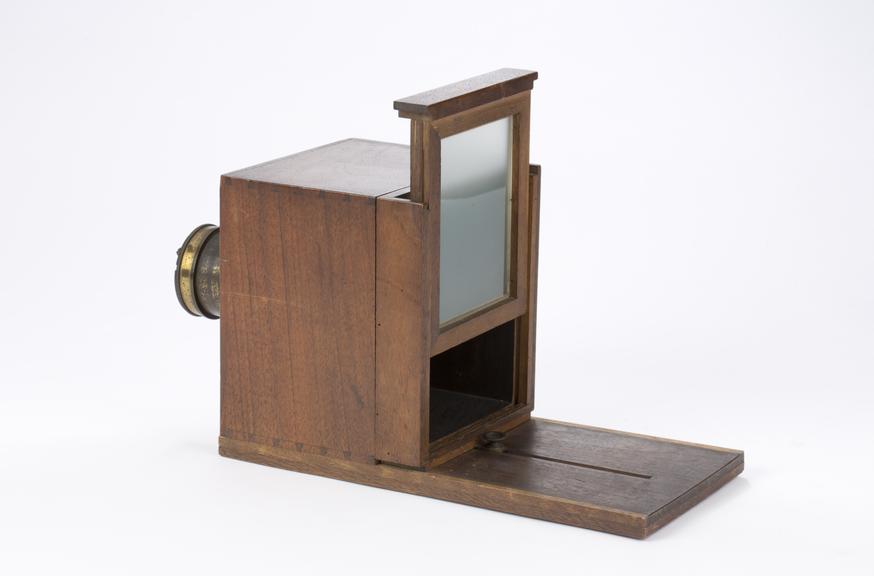
This idea, the negative-to-positive method, shaped photography for the next 150 years. The calotype lacked the crisp detail of a daguerreotype. Its paper fibers gave the image a soft edge. But it solved a problem the daguerreotype could not. It made photographs reproducible. That single change mattered more than sharper detail ever could.
The First Portraits And The First Selfie
Early photographs showed buildings, streets, and still objects. People proved much harder to capture. They moved. They blinked. They could not sit still for long.
In the spring of 1838, Daguerre photographed a busy street in Paris. The long exposure erased every moving person from the frame. Only two figures stayed still long enough to appear. One was a man getting his boots shined. The other was the man doing the shining. Neither knew he had just become one of the first humans ever caught on camera.
The Collodion Process And The Tintype
By 1850, photographers wanted something better. The daguerreotype was fragile. The calotype lacked detail. A sculptor named Frederick Scott Archer found a new answer.
Archer's collodion process coated a glass plate with a solution full of light-sensitive silver. The images came out sharp and far cheaper than daguerreotypes. There was one catch. Photographers had to coat, shoot, and develop the plate while it stayed wet. This had to happen within minutes. The process forced anyone working outdoors to carry a portable darkroom.
One version of this process reached a much bigger audience. In 1856, two inventors patented the tintype at almost the same time. Hamilton Smith worked in America. William Kloen worked in Britain. Despite its name, the tintype used thin iron, not tin. It made a tough image that could survive in a pocket without breaking.
The Dry Plate And The Birth Of The Snapshot
Wet plates demanded speed and a darkroom on hand. In the 1870s, a doctor named Richard Leach Maddox found a way past that problem.
Maddox built a dry plate coated in gelatin. Factories could make it ahead of time and store it for later use. Photographers no longer mixed chemicals on location. They could buy ready-made plates, carry them anywhere, and develop the results afterward. This single change made cameras smaller and far easier to use.
Shorter exposure times came with the dry plate too. Photographers could now catch motion and real expressions. People started taking pictures that looked natural instead of staged. This was the moment photography stopped feeling like a formal sitting. It became something quick and personal. The snapshot was born.
Eastman, Kodak, And The Democratization Of Photography
George Eastman saw a problem the dry plate had not solved. Cameras were still big. Using one still took real skill.
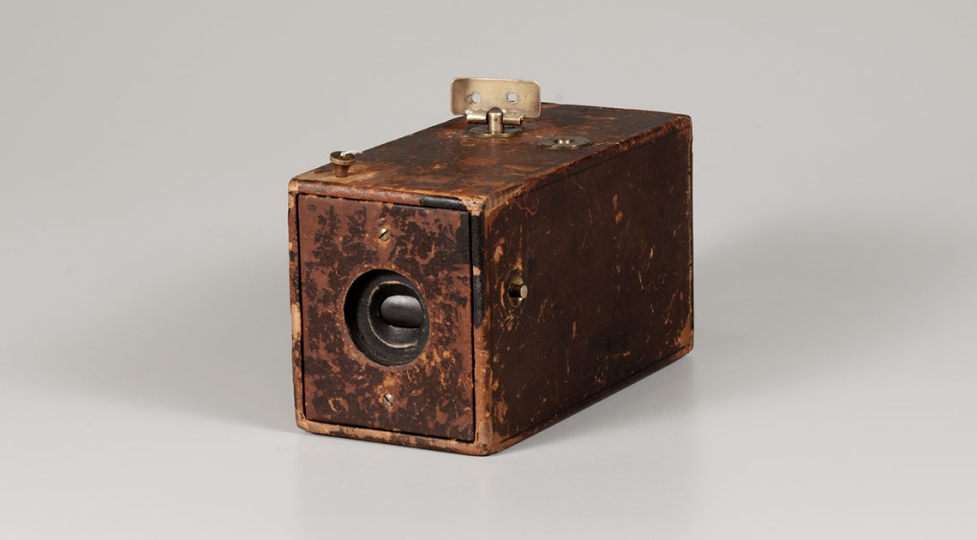
In 1888, Eastman launched the first Kodak camera. It used flexible roll film instead of single plates. His slogan said it all: "You press the button, we do the rest." A customer could shoot a full roll of film. Then they mailed the whole camera back to Kodak. Kodak would send back prints along with a loaded camera, ready to use. No darkroom. No chemistry. No training needed.
This changed who got to take pictures. Before Kodak, cameras belonged to scientists and trained professionals. After Kodak, they belonged to families and curious amateurs too. Later models, like the Kodak Brownie, pushed prices even lower. A camera that once cost a fortune now fit an ordinary budget. Photography had taken its first true leap toward everyone.
The Leica, 35mm Film, And The Golden Age Of Portable Photography
Kodak made photography cheap. Cameras stayed bulky, though. A German engineer named Oskar Barnack wanted something small enough to carry on long hikes.

Barnack worked at a company called Leitz. He built a compact camera around a smaller film size. He chose 35mm movie film and ran it sideways through the camera body. The result became the Leica. It slipped into a coat pocket with ease. It also produced images sharp enough for serious professional work.
The Digital Revolution
Film ruled photography for over a century. It had a quiet limit, though. Every shot cost money. Every roll needed chemical development before anyone could see results.
The seeds of change appeared in 1969. Willard Boyle and George Smith built a small chip at Bell Labs. People call it the charge-coupled device, or CCD. This chip turned light into an electronic signal.

It took years to reach regular buyers in a usable form. Kodak released an early professional digital camera in 1991. It cost about $13,000, far beyond most budgets. Minolta followed in 1995. The brand built one of the first portable digital cameras made for working photographers.
Digital sensors changed the basic math of photography. Film cost money with every single shot. A digital sensor let you take a thousand photos for free. You just had to own the camera first.
You could check a picture right away on the screen. You could delete it if it failed. News photographers adopted digital tools fast, since deadlines no longer waited on a darkroom. This shift erased one of photography's oldest headaches: the wait.
The Smartphone Era
Digital cameras made photos cheap. They still asked you to carry a separate device, though. The next leap folded the camera into something people already carried everywhere.

In 2000, the Sharp J-SH04 put a camera inside a mobile phone. This had never happened before. It was a low-quality novelty at first, more toy than tool. That changed fast. The first iPhone arrived in 2007. It turned the smartphone into a real photographic tool. It fit in a pocket. It connected straight to the internet too.
This mattered for a reason beyond simple convenience. A camera that stays with you gets used all the time. A separate device never gets used this much. People began photographing meals, pets, sunsets, and small moments they once skipped. Sharing followed at once, through texts and social apps built for this purpose. The gap between taking a photo and showing it to someone else nearly vanished.
RELATED: Best Camera Phones For Photography In 2026 (What Pros Actually Use)
The AI Paradigm
Smartphones are thin. Thin bodies leave little room for big lenses. To work around that limit, phone cameras turned to software instead of optics.
Modern phones often carry several small lenses, each tuned for a different job. Software then blends their input together. It relies on systems trained to spot faces, food, landscapes, and low light.
This is computational photography. It does work that once needed a skilled photographer at the controls. The phone studies the scene. It predicts what will look good. Then it adjusts exposure, color, and sharpness in real time. You never have to touch a single setting.
This shift carries weight beyond convenience. For most of its history, a photo proved something real. It proved that something had stood in front of the lens. AI tools now blur that line. Software can rebuild, stretch, or invent parts of an image the sensor never saw. Some people use these tools just for fun. They smooth skin or swap a gray sky for a blue one. Others use them for something bigger.
Think about young people in poor neighborhoods. Many now use AI camera tools on ordinary phones. They photograph run-down buildings and forgotten public spaces. Then they use AI editing to picture what those same places could look like rebuilt. One phone, with the right software, can match a full design team. This is the newest stretch of a very old pattern. The tools keep getting smarter. More people keep gaining access to them.
Best Phone Tripods
Conclusion
The next chapter of this story will not come from a single famous inventor. It will not happen the way it did with Niépce or Daguerre. Each of them worked alone in a small shop. It will come from millions of ordinary people, each holding a small glass rectangle. That rectangle carries nearly two thousand years of invention inside it. The dark chamber has come a long way. It fits in your pocket now. It is still changing.