

![[Artist Story] Salvador Dalí Paintings: Symbolism & Techniques Explained](http://kraftgeek.com/cdn/shop/articles/Salvador_Dali_Paintings.jpg?v=1766754107&width=1600)
Salvador Dalí remains one of art history's most captivating mysteries. How did he transform fleeting dreams into timeless icons that still mesmerize artists today?
His paintings invite us into worlds where reality bends. The subconscious takes center stage in every canvas he touched. This journey explores his eccentric life and legendary masterpieces. We'll decode the specific techniques he used to change art forever.
The Man Behind The Mustache: Dalí's Formative Years
Understanding Dalí requires looking past the eccentric public persona. The disciplined student of art beneath provided fuel for his explosive imagination.

From Prodigy in Figueres to the Parisian Avant-Garde
Born in Figueres, Spain in 1904, Dalí mastered classical painting early. His prodigious talent drew attention before he reached adulthood.
Paris called to him like a siren. He joined the Avant-Garde movement and met André Breton there. This exposure shifted his focus from external reality to internal landscapes. He merged traditional Spanish training with radical Surrealist ideas. Something entirely new emerged from this fusion.
Gala: The Ultimate Muse and Creative Partner
Gala was far more than a model or wife. She became his ultimate muse and essential creative partner.
She managed the practicalities of daily life. This freed his imagination to roam without restraint. Her image appears in countless masterpieces as goddess or religious icon.
Crafting the "Dalí" Persona: A Lesson in Artistic Branding
Dalí pioneered artistic branding before the term existed. His upturned mustache and wild eyes became calculated tools. Outrageous public stunts reinforced his image. He once attended a London exhibition in a diving suit. He understood that strong personal branding makes art unforgettable.
His own life became a performance piece. Future generations learned that an artist's identity matters as much as canvas.
RELATED: [Artist Story] Johannes Vermeer Masterpieces That Changed Art History Forever
Decoding Dalí's Iconic Masterpieces
Dalí's paintings aren't random images thrown together. Each melting object and elongated limb serves a specific symbolic purpose.
The Persistence of Memory (1931): More Than Melting Clocks
His most famous work explores time's fluid nature. The painting measures only 24 by 33 centimeters, yet it dominates art history. Melting clocks suggest time holds no power in dreams. The distorted face in the center is a self-portrait. Dalí becomes one with the landscape itself.

The symbolism of time intersects with the unconscious mind here. He challenges our perception of reality and waking rigidity. This wasn't painted as simple hallucination but as philosophical statement.
The Temptation of St. Anthony (1946): A Surrealist Battlefield
Dalí presents a spiritual battlefield in this 1946 masterpiece. Fantastical creatures carry the weight of worldly temptations.

Elephants with spindly, spider-like legs tower over the saint. St. Anthony stands small and vulnerable, holding a cross. The painting captures intense spiritual conflict between desire and faith.
He took a traditional religious theme and transformed it. Modern nightmare meets ancient spiritual struggle in this analysis.
The Burning Giraffe (1937): Political Anguish in Dreamlike Form
The Spanish Civil War raged when Dalí created this work. Political anguish flows through every brushstroke in dreamlike form. A giraffe engulfed in flames dominates the background. It symbolizes the senseless destruction that war brings to civilization.

Figures in the foreground have drawers protruding from their bodies. These drawers represent hidden secrets of the human mind. Dalí channeled deep-seated anxiety into symbolic imagery that still resonates.
The Dalí Method: A Fusion of Technique and Vision
His genius wasn't just what he painted but how he approached creation. Specific mental and physical systems translated visions to canvas.
"Paranoiac-Critical Method": Painting the Irrational
This method was Dalí's primary contribution to artistic theory. He described it as accessing the irrational mind while maintaining conscious control.
He induced a state of "ordered delirium" to see multiple meanings. A rock formation might suddenly become a lion or human face. This allowed him to paint the irrational with photographic clarity.
Masterful Draftsmanship Meets Dreamscape Imagery
Dalí's work unsettles because of his masterful draftsmanship. He painted impossible dreamscape imagery with Renaissance-level precision.
Hyper-realistic style makes bizarre elements feel terrifyingly real. Traditional techniques depict impossible things throughout his Salvador Dalí paintings. This contrast between old-world skill and modern madness creates his power.
He called his works "hand-painted dream photographs." The description captures his artistic techniques perfectly.
A Symbolic Language: Drawers, Crutches, Ants, and Eggs
Dalí developed a personal symbolic language that recurs throughout his career. Understanding these symbols unlocks deeper meaning in every canvas.
Drawers represent subconscious secrets that only psychoanalysis can open. Crutches signify human weakness and the need for support. Ants symbolize decay, mortality, and intense desire consuming us.
The egg appears as a symbol of hope and love. It represents potential for new life emerging from darkness. Learning this vocabulary lets viewers read his paintings like visual poetry.
Why Dalí's Art Captivates Modern Artists
Decades after his death, Dalí remains a primary influence. His approach offers vital lessons for anyone working in creative fields.
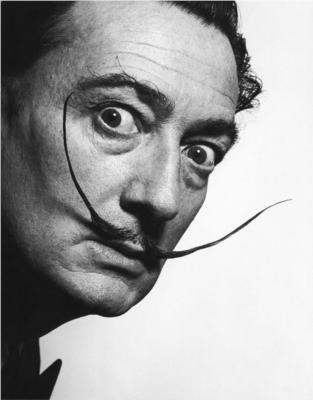
The Power of a Unique Personal Vision
Dalí proved that unique personal vision is the artist's greatest asset. He didn't follow trends but forced the world to follow him.
Modern artists look to him as a reminder to be fearless. The more specific and personal your work becomes, the more universal its appeal. His legacy encourages us to trust our strangest ideas.
Technical Excellence in Service of the Imagination
He demonstrated that technical excellence should always serve imagination. High-level skill isn't an end in itself.
Skill becomes a tool to make dreams visible to others. Modern digital artists use his example to master their software. They strive to flawlessly render their own surreal narratives.
Dalí's work remains the gold standard for blending rigorous craft with wild creativity. The life and influence of Salvador Dalí continue to shape contemporary art movements.
Best Portable Easel Stand For Art Students:
Conclusion
Salvador Dalí's world teaches us to fearlessly blend skill with personal symbolism. He showed that dreams are valid and vital sources of inspiration. We shouldn't fear exploring surreal narratives within our own minds. Whether you work with oil on canvas or pixels on screen, embrace your unique perspective.
His paranoiac-critical method proves that controlled madness can produce genius. The world always hungers for visions that challenge reality and expand possibility.